

🌴Retiring in Spain with the Non-Lucrative Visa | Climate, Housing & Language Tips

Did you know that spain ranks 3rd globally in the 2025 Global Retirement Index, making it one of the best countries in the world to retire? With its affordable cost of living, top-quality healthcare, and relaxed Mediterranean lifestyle, it’s easy to see why. Having traveled across Europe myself, I can confirm: Spain truly offers something unique — the perfect balance of comfort, climate, and culture.
Now that you’re convinced on why Spain is the ideal place to retire, let’s talk about how to make it happen — starting with the key things no one talks about and you should consider before choosing on where to settle.
But before you can truly call Spain home, there’s one essential step — getting the right visa.
📄 How to stay legally in Spain?
🪪 1. What Is Spain’s Most Popular Retirement Visa ?
If you’re planning to retire or settle in Spain long-term, the Non-Lucrative Visa is the residence permit you’ll need to start your new life here. This visa allows you to live in Spain without working, making it the perfect choice for retirees or anyone with passive income or savings abroad.
Without it, you can only stay in Spain for up to 90 days within a 180-day period as a tourist — which makes it impossible to rent long-term, register locally, or fully settle.
Holding a valid Spanish residence permit also gives you full access to travel across the Schengen Zone year-round, but in order not to loose your residence, you must spend at least 183 days per year physically in Spain as your main place of residence.
The initial visa is valid for one year, and can then be renewed for two years at a time, eventually leading to permanent residence after five years.
To qualify, you’ll need to show:
- 💶 Sufficient income or savings — around €28,000 per year for one person (and an extra €7200 per family member).
- 🩺 Private health insurance valid in Spain.
- 📜 Clean criminal record and recent medical certificate.

⚠️ Important: arriving in Spain without the Non-Lucrative Visa means you’ll have to return to your home country to apply for it, losing both time and money.
Applications are always made at the Spanish Consulate in your country of residence — Spain currently has 9 consulates in the U.S., 3 in the U.K., and 8 in Canada.
That’s why it’s essential to prepare your application correctly from the start — gathering the required documentation, booking your appointment early, and ensuring all documents are translated and apostilled. For couples or families, each dependent must apply at the same time, with proof of family ties and sufficient combined income.
💶 2. What Financial Proof Can You Provide?
To be approved for Spain’s Non-Lucrative Visa (NLV), you must prove that your financial resources are sufficient, stable, and easily accessible. The Spanish Consulates base their calculation on the IPREM (a government income index updated yearly).
In 2025, the total amount you must demonstrate equals approximately 400% of the IPREM for the main applicant, plus an additional 100% per dependent. In practical terms, this means you need to show the following minimum income or savings levels:
| Applicant(s) for the NLV Spain | Annual Amount (€) | Monthly Equivalent (€) |
|---|---|---|
| Main Applicant | €28,800 | €2,400 |
| Main Applicant + 1 Dependent | €36,000 | €3,000 |
| Main Applicant + 2 Dependents | €43,200 | €3,600 |
| Main Applicant + 3 Dependents | €50,400 | €4,200 |
| Each Additional Dependent | +€7,200 | +€600 |
What documents will you need to provide specifically?
- 🏦 Bank Statements: showing a consistent balance above the required amount for the past 3–6 months.
- 💸 Passive Income Proof: pension letters, investment dividends, or rental contracts with corresponding bank receipts.
- 📈 Investment Certificates: official statements reflecting the value of liquid assets like stocks or bonds. (Real estate alone isn’t sufficient unless supported by accessible savings.)
⏳ 3. How Long Does the Non-Lucrative Visa Take to Process?
Processing times vary depending on your consulate, but you should plan for 4 to 8 weeks from the date of your appointment. Some consulates may request extra documents, so it’s smart to start preparing at least three months in advance.
🪪 4. What Happens After You Arrive in Spain?
When you arrive in Spain with your visa, you’ll need to complete a few essential steps to formalize your residence:
- Register your address (empadronamiento) at the local town hall.
- Apply for your TIE (Tarjeta de Identidad de Extranjero) — your official residence card — within 30 days of arrival.
Your initial visa is valid for one year, and renewals are typically granted for two years at a time, provided you continue to meet all requirements.
If you’d like a detailed step-by-step guide on how to apply for the Non-Lucrative Visa, check out our full post on the Non-Lucrative Visa in Spain.
Now that you understand the legal part of settling in Spain, let’s move on to something just as important — choosing the right place to live.
🔍 Things to check before picking up a definite place
☀️ 1. Best Climate to Retire in Spain
Spain offers a wide variety of climates — Mediterranean, continental, oceanic, mountain, and semi-arid. I say this because I often see Spain portrayed as a country where everyone takes a siesta on the beach every day — no matter where we live. But that couldn’t be further from the truth.
Knowing the differences helps you choose the area that matches your lifestyle, whether you prefer warm coasts or cooler inland towns.
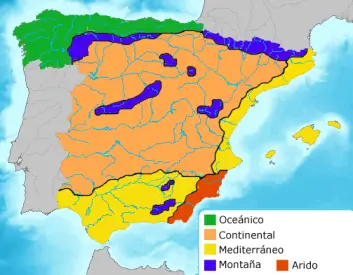
What types of climates do we have in Spain?
- ☀️ Mediterranean Climate (Yellow)
- 🌤️ Continental Climate (Orange)
- 🌧️ Oceanic Climate (Green)
- 🏔️ Mountain Climate (Purple)
- 🌵 Semi-Arid Climate (Red)
- 🌴 Tropical / Subtropical Climate – Canary Islands (not shown on map).
⚠️ My advice? Don’t rush into buying right away.
Start by renting for a few months and take the time to explore different regions — ideally visiting them during their worst time of year. Go when it’s too hot, too rainy, or too quiet. That’s when you’ll truly get a sense of what daily life feels like beyond the holiday season.
💶 2. Cost of Housing in Spain
Spain’s housing prices can vary widely depending on location. The gap between a quiet inland town and a bustling coastal area can be surprisingly large.
In this section, we’ll use home purchase prices to illustrate those differences — but keep in mind that rental prices tend to follow the same pattern.
Costa del Sol in Andalusia remains one of the most popular choices for retirees and expats alike. Property prices in areas like Marbella and Málaga now average over €3,000 per m².
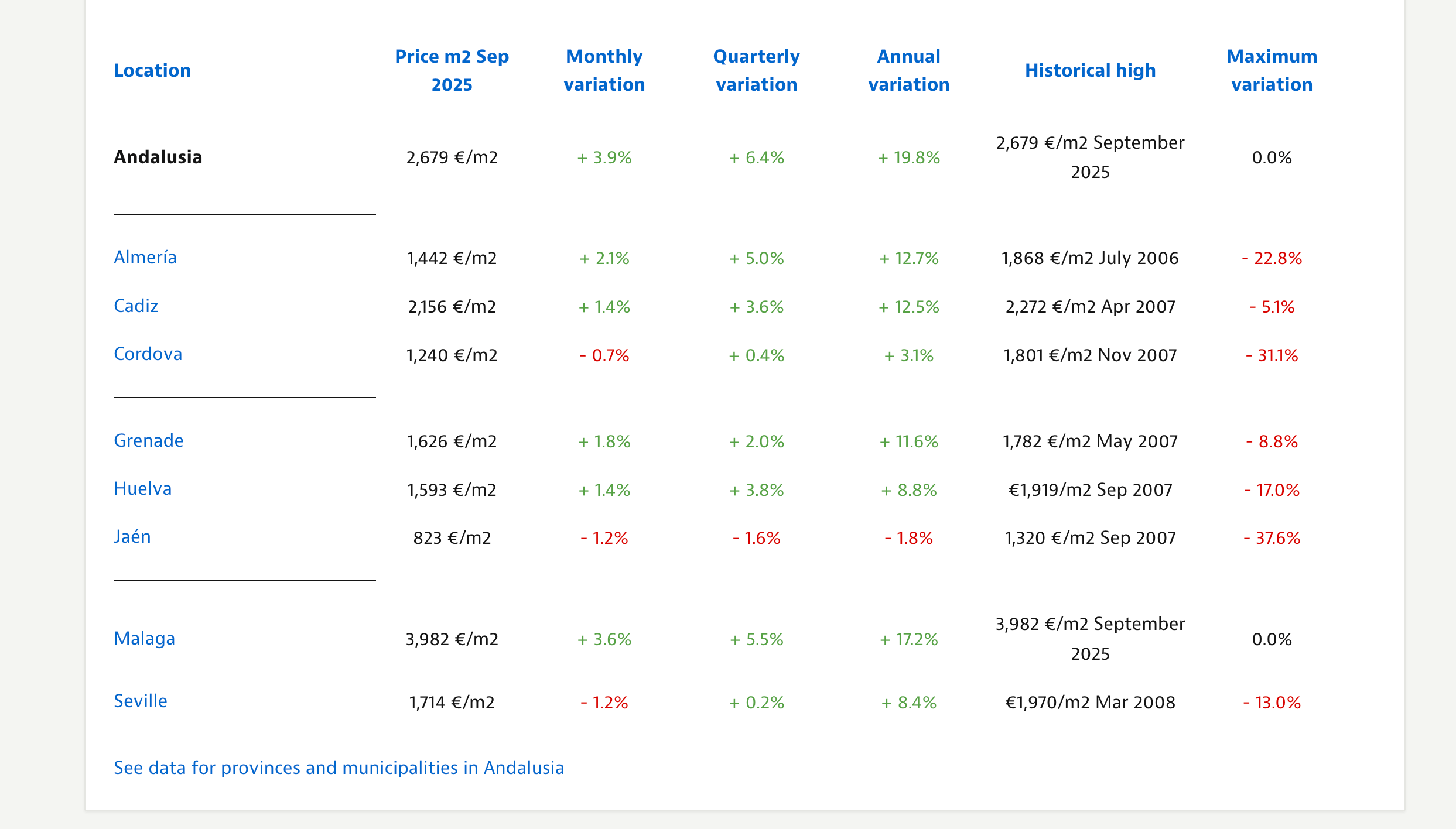
For a more budget-friendly retirement, consider the smaller towns of Andalusia — they combine charm, low living costs, and promising investment opportunities.
Further east, the Costa Blanca — covering the provinces of Alicante, Valencia, and Castellón — offers a balanced mix of coastal living and reasonable prices.
Across the region, average property costs range from €1,500 to €2,200 per m², with Alicante province being the most expensive, reaching up to €2,600 per m² in sought-after coastal areas.
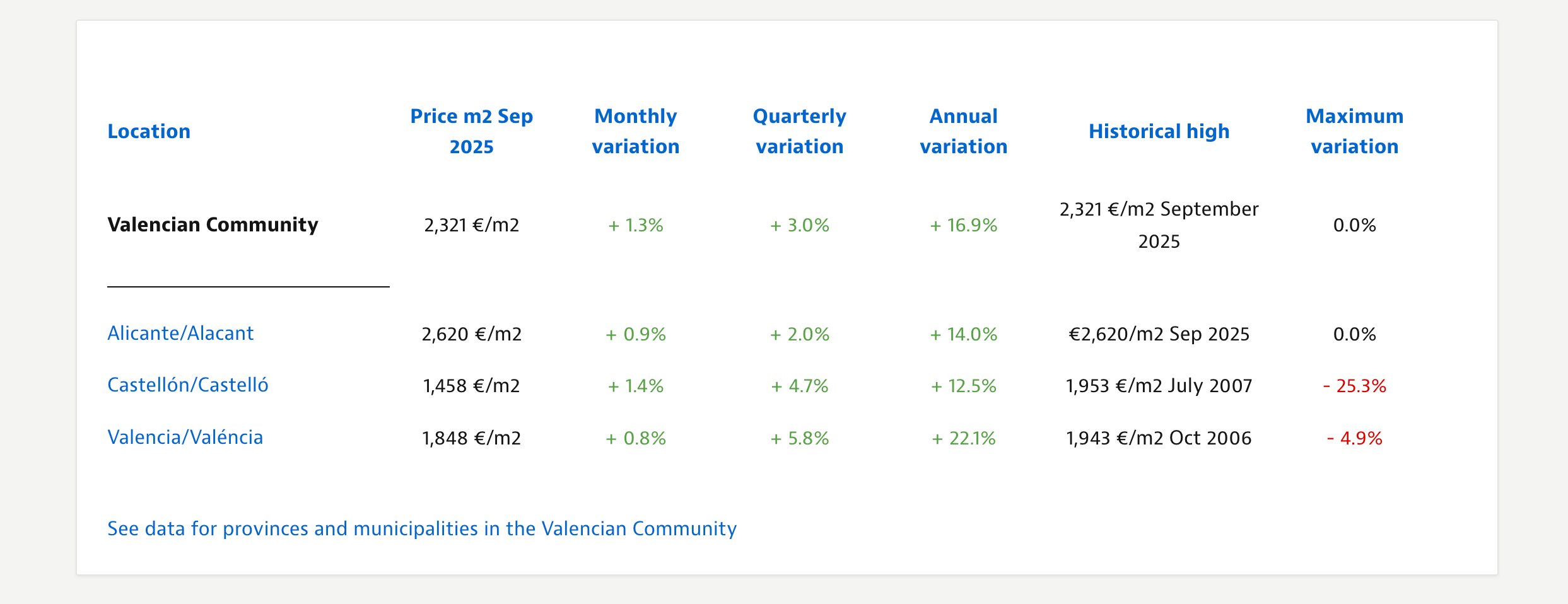
The Costa Blanca remains a favourite among retirees from Northern Europe making it one of the most practical places to retire in Spain.
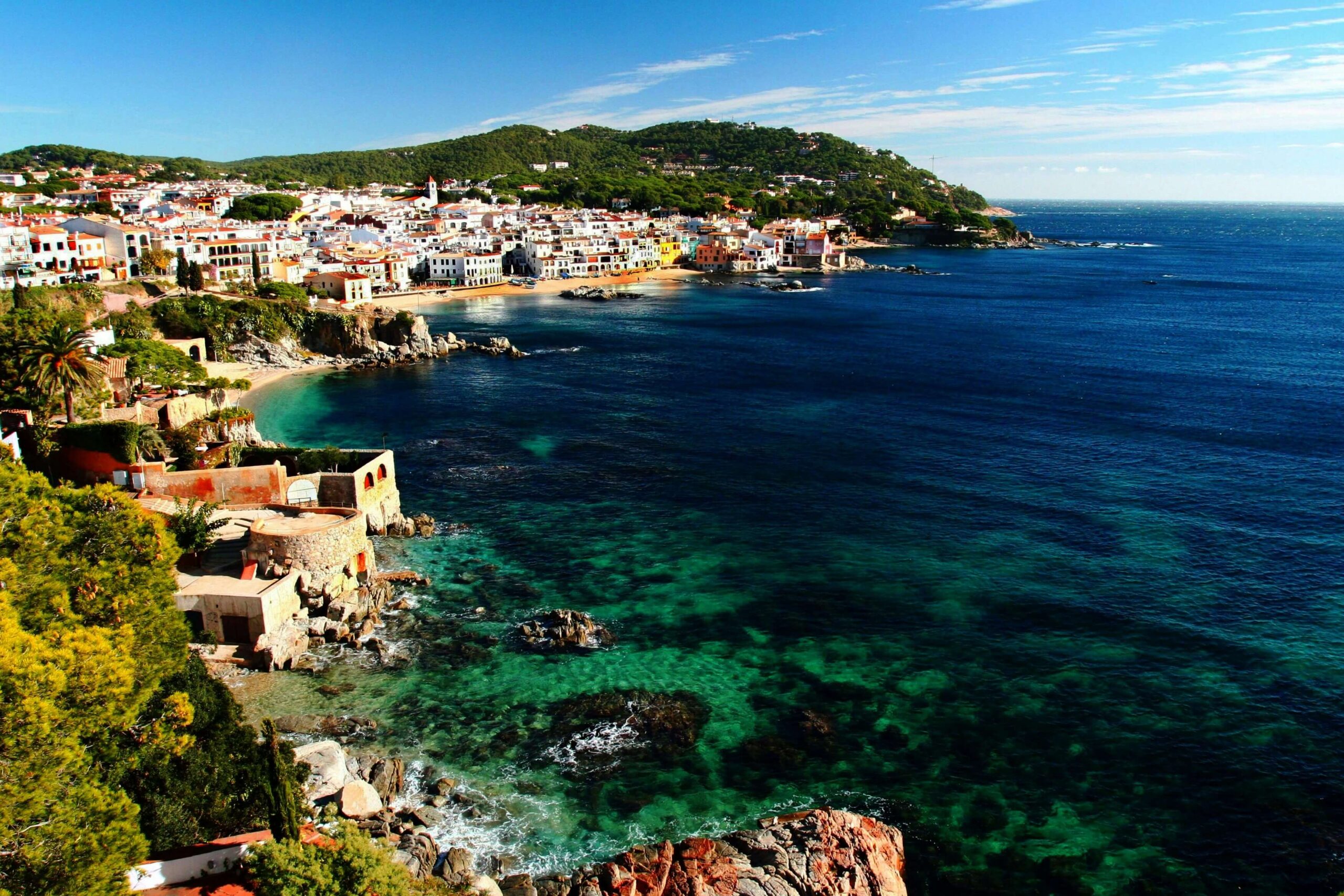
Further north, in Catalonia’s Girona province — where the stunning Costa Brava stretches along the Mediterranean.
The Costa Brava is often regarded as one of the country’s most beautiful coastlines, dotted with charming towns like Palamós, Begur, L’Escala, and Cadaqués.
Property prices average around €2,500 per m².
This price point is highly competitive when compared with other premium coastal areas such as Marbella, Málaga, Ibiza, the Balearic Islands, or the Canary Islands, where prices can easily double.
Further south, Murcia offers a completely different rhythm. With its semi-arid climate, you can expect sunshine almost all year round, warm winters, and very reasonable property prices — roughly €1,500 per m² on average. It’s an ideal choice for retirees looking for good weather, affordability, and a relaxed Mediterranean lifestyle without the crowds of the bigger coasts.
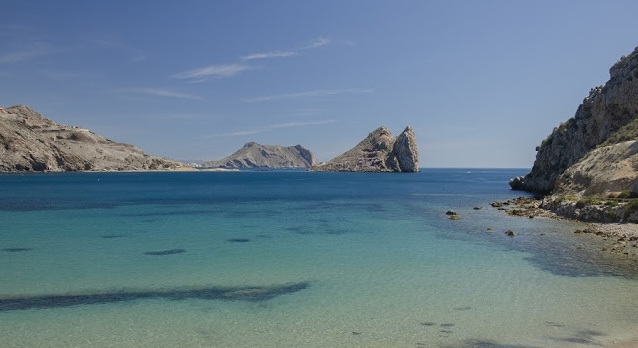
And then there’s the option of moving to one of Spain’s major cities.
Living in a large city means having access to international communities, excellent transport links, and endless cultural events. See the comparison chart below where I’ve laid out prices of major cities so you can compare.
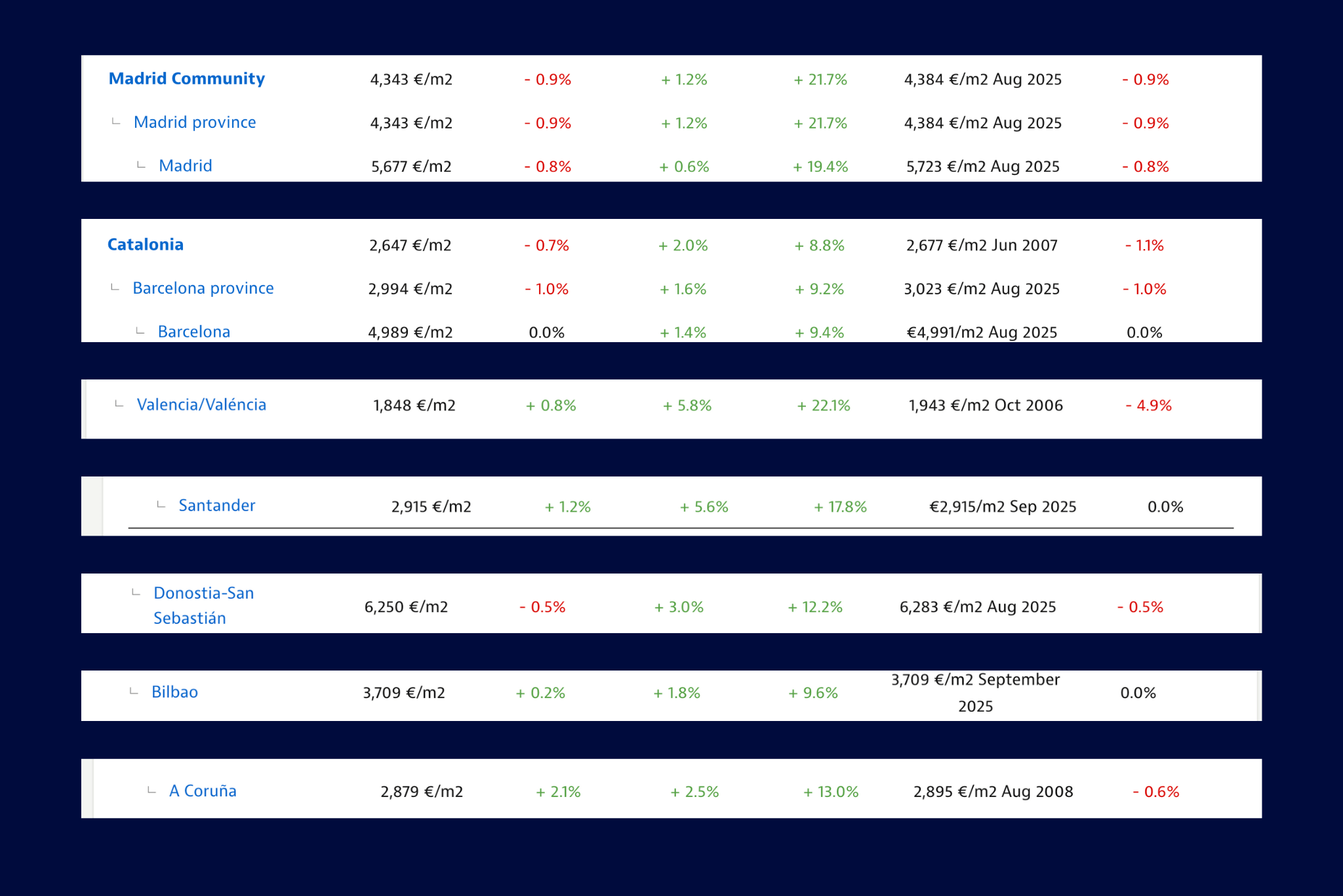
Comparison of property prices in major Spanish cities: Madrid, Barcelona, and Valencia. Data from IDEALISTA website.
🇪🇸 3. The Language Barrier in Spain: Can I move to Spain without speaking spanish?
When we help expats move or retire to Spain, one of the first questions we get is: Do I really need to speak Spanish to live in Spain? The answer is yes!
In most popular destinations — like the Costa del Sol, Alicante, Barcelona and major cities — you’ll likely find yourself surrounded by large expat communities where English (and sometimes even German or French) is widely spoken. Daily life, shopping, and socializing can be surprisingly easy without much Spanish.
If you choose to buy a home inland, where prices tend to be more affordable, you’ll often find yourself in smaller villages where English isn’t widely spoken. These areas offer a more authentic Spanish lifestyle — but it also means daily interactions will likely happen in Spanish. It’s a wonderful opportunity to immerse yourself in the culture, though it’s worth being prepared for the language difference if you’re used to expat-heavy coastal towns.
🧭 Conclusion | Living the Dream
Start with the Non-Lucrative Visa — it’s the key that unlocks everything else. Once your residence is approved, you’ll have the freedom to enter, stay, and take your time exploring Spain without the 90-day tourist limit.
Worried you haven’t found the perfect place yet? Don’t be.
After your visa is granted, rent first and treat your first few months as a discovery phase: try a coastal town, spend a winter inland, or experience city life. If one spot doesn’t feel right, simply move and try another — that’s the beauty of coming in legally and calmly.
Spain has a place for every rhythm, lifestyle, and budget.
☀️ Ready to make it happen?
We’ll help you get your Non-Lucrative Visa approved — and even find a beautiful place to live in Spain if you need us to. Book a call today and let’s turn your plan into reality.
🇪🇸 Spain Visa & Living FAQs
START RIGHT NOW
Get Expert Guidance from Núria and her team.



I started writing down one thing at the end of every day — what I actually managed to do. Not a to-do list, not plans. Just one small win. It’s surprising how quickly it shifts your perspective.
Hey I know this is off topic but I was wondering if you knew of any widgets I could add to my blog that automatically tweet my newest twitter updates. I’ve been looking for a plug-in like this for quite some time and was hoping maybe you would have some experience with something like this. Please let me know if you run into anything. I truly enjoy reading your blog and I look forward to your new updates.
Unknown Suffering Awe And Saster Remix FNF feels polished compared with a lot of random mod pages. The music and visuals fit together pretty well.
Nice collection for fnf mods online. The site has a good mix of popular FNF mods and more specific pages.
Good page for play FNF mods online. I like that it makes the mod easy to find without searching through a lot of unrelated links.
Слушайте кто ищет школу А домашние задания — это вообще ад А знаний реальных ноль Короче, реально крутая система — онлайн школа Москва с учителями профи Ребёнок учится и не перегружается В общем, жмите чтобы не потерять — Не мучайте себя и детей Перешлите другим родителям